
Last Updated: October 30, 2026
Quick Summary
Book lifestyle photography Denver by starting with a brief that defines what the images must accomplish, then move through concept, logistics, and shoot day. Send your shot list to your event planner and marketing lead at least a week before the event, and confirm deliverables, turnaround, usage rights, and rescheduling terms before paying a deposit.
- A shot list built around deliverables, not locations, keeps a shoot on schedule and on message.
- Commercial photo shoot planning moves through four stages: brief, concept, logistics, and shoot day.
- Skipping the brief is the most common mistake, leaving teams without a clear goal for the images.
- One well-planned session can supply website headers, social posts, email banners, press materials, and recruiting pages.
- The biggest booking mistake is waiting until a campaign or event deadline is close.
Table of Contents
- Why Book Professional Lifestyle Photography in Denver
- What a Commercial Lifestyle Photographer Brings to Your Brand
- Building Your Lifestyle Photography Shot List
- Commercial Photo Shoot Planning: From Brief to Shoot Day
- Brand Photography That Works Across Every Channel
- Book Your Photoshoot With a Denver Lifestyle Photographer
- Frequently Asked Questions
Why Book Professional Lifestyle Photography in Denver
Booking lifestyle photography Denver starts with one decision: do you want posed pictures or pictures that show how your business actually feels to work with? If the term is new to you, our guide on what lifestyle photography is and how it can help your business explains the concept and its benefits.
Here’s what most guides get wrong: they treat a shoot like a transaction. Pick a date, show up, get photos. The businesses that end up with imagery they actually use for years do the opposite. They plan the story first, then book the shoot around it.
Below, we’ll walk through the full process, from the brief to the final delivery, so you know exactly what you’re buying before you commit.
What a Commercial Lifestyle Photographer Brings to Your Brand
A commercial lifestyle photographer builds scenes that look spontaneous but are planned to serve a message. That’s the core distinction. Anyone can point a camera at your team. The work is in arranging a room, a light, and a moment so the resulting image says something specific about your company.
For executives and small business owners, this matters most in three places:
- Rebranding. New positioning needs new imagery, not recycled stock.
- Look books and social content. A steady stream of on-brand photos beats one big annual shoot.
- Team cohesion. Headshots and group images that look like they belong to the same company.
If you want to see how this plays out in practice, browse our lifestyle photography portfolio before you decide on a style.
Lifestyle Versus Product Photography
The two serve different jobs. Product photography isolates an object so buyers can inspect it (Product photography: Tips & techniques). Lifestyle photography puts people in context so buyers can imagine themselves there. Most brands need both, but they rarely need them in equal measure. A service business usually needs lifestyle images far more than product shots, because there is no product to isolate.
Building Your Lifestyle Photography Shot List
A lifestyle photography Denver shot list is the document that keeps a shoot on schedule and on message. It lists every scene you need, who appears in it, where it happens, and what the image is for.
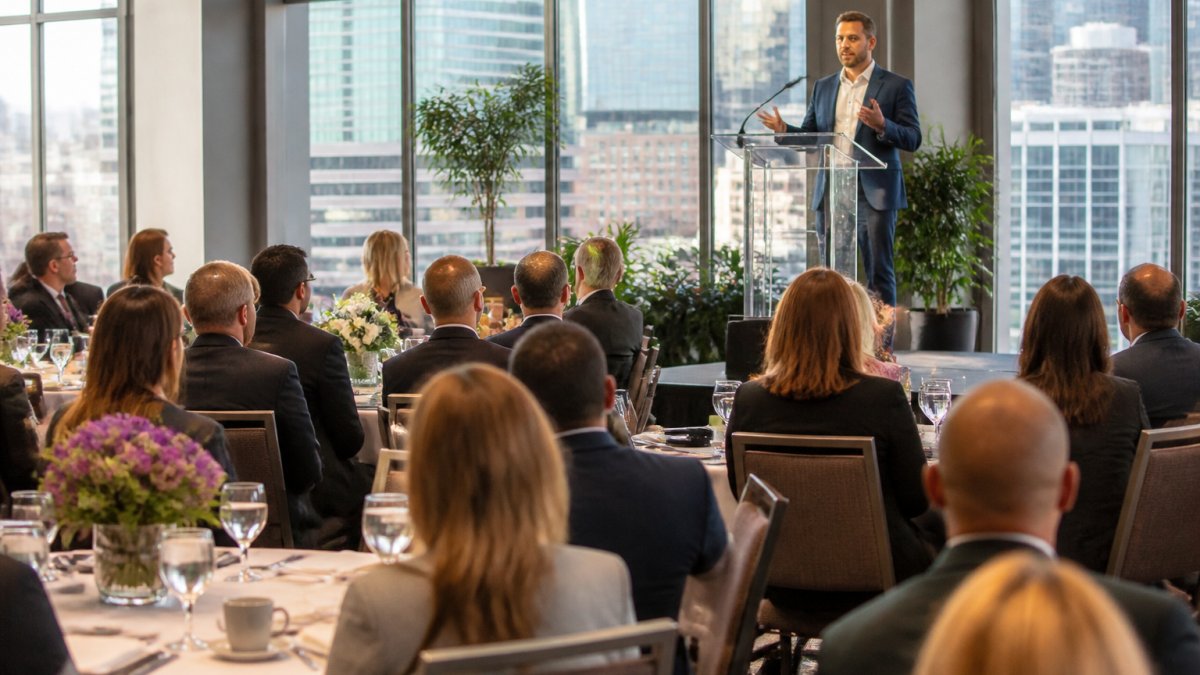
For corporate clients, the shot list is where an event shoot succeeds or fails. A gala, a keynote, a trade show booth, and a headshot station all happen in different light, on different schedules, and with different usable crops.
Corporate Event Shot List by Event Type
| Event type | Must-get scenes | Typical usable crops |
|---|---|---|
| Award ceremonies and employee recognition | Stage handoff, recipient reaction, trophy/plaque close-up, group photo with leadership | Horizontal for press and intranet, tight vertical for social |
| Galas and milestone celebrations | Arrival and registration, tablescape and venue wide, keynote speaker, dancing and candid networking | Wide hero, medium editorial, tight candid |
| Keynote speaker events and conferences | Speaker at podium, audience reaction, panel discussion, breakout session, sponsor signage | Horizontal for slides and recap posts, square for social |
| Company retreats and leadership meetings | Facilitated discussion, whiteboard and workshop, team breakouts, group portrait | Horizontal for internal comms, tight portrait for bylines |
| Networking events and business mixers | Name-badge exchange, handshake and introduction, candid conversation clusters | Medium and tight candid |
| Grand openings and ribbon cuttings | Ribbon moment, first customer, storefront wide, leadership with scissors | Wide hero, tight social |
| Product launches and brand launch parties | Product reveal, demo station, guest reaction, branded backdrop | Horizontal hero, tight product-in-hand |
| Trade shows and expos | Booth wide, staff with attendees, demo in progress, signage and collateral | Horizontal for recap, square for social |
| Corporate headshot events and portrait stations | Individual headshot, small team group, consistent backdrop across all subjects | Tight vertical for profiles, horizontal for team pages |
Start with the channels you’re feeding. A homepage hero needs horizontal space for text. A social post needs a tighter crop. A recruiting page needs faces that look approachable. A press release needs a clean stage or ribbon moment. Then group your scenes by setting and time so the day runs efficiently and no must-get moment is missed because the schedule bunched three scenes into the same ten minutes.
What to Put on the List Beyond the Scenes
A usable corporate shot list also names the people who must appear, the signage and sponsor logos that need to be legible, the wardrobe and brand-color notes, and the backup plan if a speaker runs long or a room is darker than expected.
For a deeper look at how a shot list ties into brand strategy, our small business branding photography guide covers the planning side in detail.
Send the shot list to your event planner and your internal marketing lead at least a week before the event. They will catch missing VIPs, sponsor obligations, and scheduling conflicts you cannot see from the photographer’s side.
Commercial Photo Shoot Planning: From Brief to Shoot Day
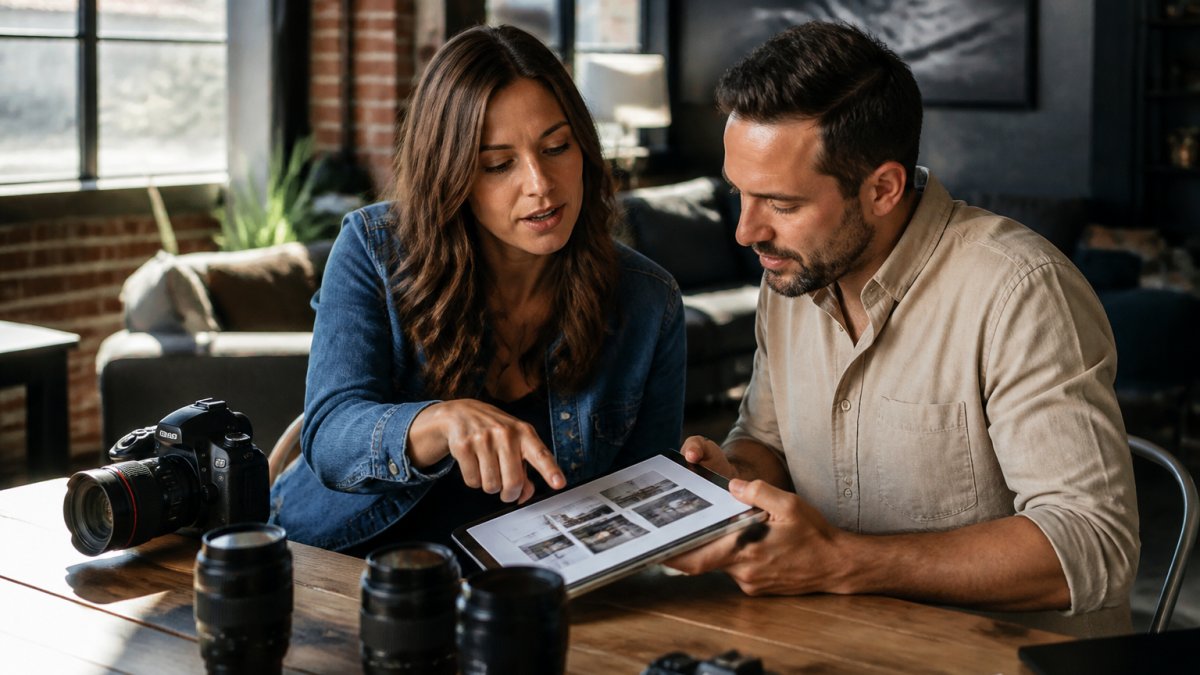
Commercial photo shoot planning moves through four stages: brief, concept, logistics, and shoot day. Skipping the brief is the most common mistake we see. Teams arrive without a clear idea of what the images need to accomplish, and the shoot drifts into generic territory.
Here’s the sequence we follow with clients:
- Brief. You tell us what the images need to do and where they’ll appear.
- Concept. We propose scenes, wardrobe notes, and locations that fit your brand.
- Logistics. We confirm people, timing, and access to the space.
- Shoot day. We direct lightly, keep the energy up, and protect the schedule.
What to Bring to Your Consultation
Bring examples of imagery you like and, just as useful, imagery you dislike. Bring your brand guidelines if they exist. Bring a list of the channels you need to fill and any deadline attached to them. If you’re planning an executive team session, bring the headcount and the scheduling constraints. That one detail shapes the entire day.
Brand Photography That Works Across Every Channel
Brand photography earns its cost when one session feeds a dozen placements. A single well-planned shoot can supply website headers, social posts, email banners, press materials, and recruiting pages.
We plan for that variety deliberately: wide scenes for hero placements, medium frames for editorial use, and tighter portraits for profiles and bylines.
Our commercial photography galleries show how that range holds together across different projects.
Book Your Photoshoot With a Denver Lifestyle Photographer
Booking comes down to three things: the scope, the date, and the deliverables. Most guides stop there. The step-by-step below outlines the booking process, from inquiry through delivery.
The Booking Process, Step by Step
- Inquiry. Tell us the event type, date, venue or location, headcount, and where the images will appear. For corporate events, include the run of show if you have one.
- Scope call. We confirm the scenes, the people who must appear, the deliverables, and any sponsor or signage requirements.
- Availability and hold. We check the date against our calendar and place a short hold while you confirm internally.
- Agreement and deposit. We send a written agreement covering scope, deliverables, usage, and rescheduling terms. A deposit reserves the date.
- Pre-event planning. We review the shot list, logistics, access, and backup plans with you and your planner.
- Shoot day. We arrive early, work the run of show, and protect the must-get moments.
- Delivery and review. You receive a proofing gallery, select favorites, and receive final edited images with the usage rights stated in your agreement.
What to Confirm Before You Pay a Deposit
- Deliverables. How many final edited images, and in what crops and formats.
- Turnaround. When the proofing gallery and finals arrive, and whether a rush option exists for press deadlines.
- Usage rights. Whether images are licensed for web, social, print, internal comms, or paid advertising, and for how long.
Pricing depends on scope, number of setups, people involved, hours of coverage, and how you plan to use the images. Visit our pricing page on the HillaryMoorePhotography website for current rates or to request a quote.
The biggest booking mistake is waiting until a campaign or event deadline is close, since shoot dates and editing time both require lead time.
If you are planning an award ceremony, gala, keynote, conference, holiday party, retreat, networking mixer, grand opening, product launch, client appreciation event, milestone celebration, trade show, or corporate headshot station, send the date and run of show through our contact page and we will be glad to discuss your coverage needs.
Frequently Asked Questions
What is lifestyle photography for a business?
Lifestyle photography shows real people in real situations rather than posed studio setups. For a business, that might mean a founder working at a desk, a team meeting in progress, or a customer using a product in a natural setting. The goal is imagery that looks and feels authentic, so viewers see themselves in the scene. Good lifestyle photography Denver brands use in marketing tends to perform well because it reads as genuine rather than staged, which builds trust with prospects and gives your social feeds a consistent human tone.
How do I prepare for a commercial lifestyle photo shoot?
Start with a clear brief: what the images are for, where they will run, and the mood you want. Build a lifestyle photography shot list with your photographer so no key moment gets missed on the day. Confirm wardrobe, location access, and any props in advance. On shoot day, keep the schedule loose enough for authentic moments to happen. Commercial photo shoot planning is where most of the quality is decided, so treat the consultation and shot list as seriously as the shoot itself.
How long does a lifestyle photography session take?
Session length depends on scope. A focused personal branding session might run a couple of hours, while a commercial lifestyle shoot covering multiple setups, people, or locations can take most of a day. Team headshot events and larger production days scale up from there. Ask your photographer to map the shot list against the available time during planning so the schedule stays realistic and you leave with the coverage your campaign needs.
What is the difference between lifestyle and product photography?
Product photography centers on the item itself, often on a clean background with controlled lighting so every detail reads clearly. Lifestyle photography puts the product, service, or person into a real context, showing how it is used and who it is for. Most brands need both: clean product shots for listings and lifestyle imagery for campaigns, social media, and brand storytelling. A commercial lifestyle photographer can often capture both in one session to keep your visual assets consistent.
If your current imagery looks like everyone else’s, that’s the problem worth fixing. HillaryMoorePhotography brings over 15 years of experience, a narrative-first approach to every session, and both photography and videography under one roof, so your brand story stays consistent from stills to motion. Get started with HillaryMoorePhotography and build a gallery your team will actually use.



0 Comments